


China Medical Travel Guide
Medical Travel to China: Complete Guide for International Patients

Estimated reading time: 20 minutes
Quick Country Access
| Country | |||
| United States | United Kingdom | Sweden | Germany |
Quick Country Access
| Destination | |||
| Chongqing | Chengdu | Guiyang | XI An |
Table of Contents
- What is Medical Travel to China?
- Why Patients Choose Medical Travel to China?
- Medical Treatment in China Cost vs Other Countries
- Medical Travel to China Process
- Who Can Benefit from Medical Travel to China?
- Is Medical Treatment in China Safe?
- China Medical Tourism for Foreigners
1.What is Medical Travel to China?
Medical travel itself is not a complicated idea. It simply means that patients cross borders in order to access medical treatment that better fits their needs. Over the years, a fairly clear global map of popular medical travel destinations has formed. People who go abroad for cosmetic procedures or affordable dental care often look toward countries like Thailand or Vietnam. Those seeking cost-effective surgeries, hair transplants, or certain aesthetic procedures frequently consider Turkey. Mexico is also commonly associated with affordable cosmetic and minor surgical treatments. Alongside these destinations, developed healthcare systems in Europe and the United States have long been seen as the “default” options in most people’s minds when thinking about international treatment. Within this global system, China has traditionally not been the first place people think of, but rather an option that is now being slowly re-evaluated.

For a long time, the typical flow of cross-border medical travel has mainly happened either between developed countries in Europe and the US, or toward well-known medical tourism hubs such as Turkey, Mexico, Thailand, and Vietnam. But in recent years, a noticeable shift has started to appear. A growing number of international patients have begun to include China in their list of possible destinations. This change is not a short-term trend or sudden surge of interest. It is the result of several long-term factors coming together, including differences in treatment costs, the high density of large public hospitals in China, and the development of strong specialties in areas such as oncology and orthopedics, as well as other unique medical approaches.

In real situations, medical travel to China is quite different from the more “light travel plus treatment” model often seen in places like Turkey or Thailand. Instead, it is usually a more structured medical decision. Patients tend to compare different countries based on their medical condition, budget, and treatment needs, and then make a practical choice. In this sense, it is less about choosing a destination for convenience, and more about making a realistic decision after evaluating multiple healthcare systems.

2.Why Patients Choose Medical Travel to China?
If we look at the real decision-making process, most patients do not start out by “choosing China.” Instead, China is usually added later, after they compare several options step by step.

The most common starting point is cost, but that is not the only reason. Many people only realize later, after comparing full treatment pathways, that the differences between countries are not just about price. They are also about how healthcare systems work differently in terms of speed, resource availability, and how easily patients can actually access treatment.

In some cases, patients in their home country may have to wait a long time for tests or surgery scheduling. In China, certain processes can move into actual treatment more quickly. At the same time, there are also patients who go through multiple consultations but still do not receive a clear treatment direction. At that point, they start looking for a second opinion, and China becomes one of the options they begin to consider.
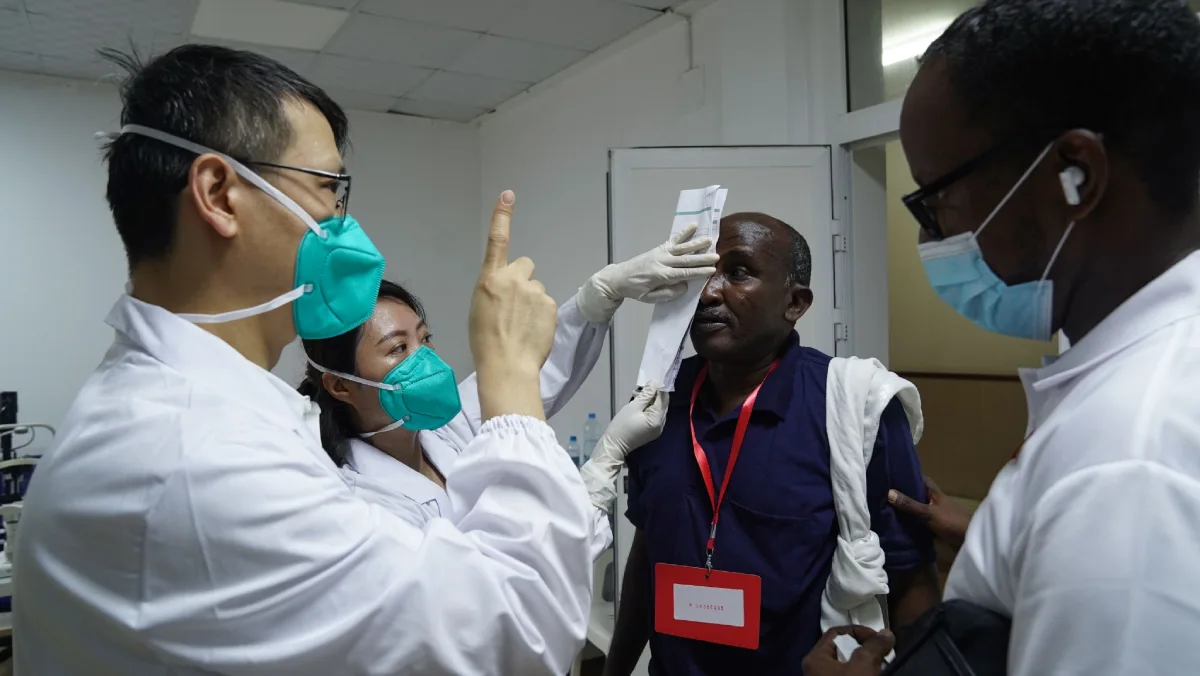
So in most cases, choosing China is not about it being “better,” but about it being more realistic and workable under their current situation.
3.Medical Treatment in China Cost vs Other Countries
If we talk about medical travel to China, one practical issue always comes up, and that is cost.
But what needs to be understood is that differences in medical costs are not just simple price comparisons. They reflect differences in how healthcare systems are structured. The same treatment path in different countries can involve very different diagnostic steps, hospital stay durations, and follow-up processes, and all of these factors will affect the final cost.

In the past, countries like Turkey, Mexico, Thailand, and Vietnam became well-known medical travel destinations, mainly because they were strong in standardized, light medical services such as cosmetic procedures and dental treatments.
For example, when it comes to conditions like uterine fibroids that require a complete and full treatment process, simply comparing prices can easily be misleading.
| Comparison Dimension | China Top-tier Hospital HIFU Non-invasive Ablation (medical travel to China, all-in-one package for international patients) |
US ACA Bronze Plan Laparoscopic Myomectomy |
Australia Private Hospital Laparoscopic Myomectomy |
|---|---|---|---|
| Treatment Plan | HIFU High-intensity Focused Ultrasound, uterus-preserving, no surgical incision | Laparoscopic minimally invasive myomectomy with puncture wounds | Laparoscopic minimally invasive myomectomy with puncture wounds |
| Total Full-cycle Medical Cost (unified standard: full medical service package) |
4,500 USD All-inclusive: pre-operative MRI, sedation & ablation, 4 annual MRI follow-ups, English medical consultation, remote follow-up service |
Patient out-of-pocket: 4,200–7,500 USD Total hospital bill: 18,000–24,000 USD |
Patient out-of-pocket: 2,800–4,500 AUD Total hospital bill: 11,000–16,000 AUD |
| Pre-treatment Waiting Period | Green channel for international patients; all pre-examinations & treatment completed within 3–7 days after appointment | 2–4 months waiting for specialist referral; additional 2–6 weeks for pre-operative tests | 2–6 weeks reservation for private hospital; 45–54 days queue for public system |
| In-hospital Stay Duration | Outpatient day case, no hospitalization required; only 4–6 hours observation before discharge | 2 overnight stays (~40 hours total with companion required) | 1 overnight stay, 24-hour post-op observation |
| Post-op Recovery Period | Resume daily activities in 3–7 days; eligible for cross-border travel 10 days after treatment | 6–8 weeks recovery; heavy labor & long-haul flights prohibited within 2 months | 4–6 weeks recovery; not suitable for long-distance cross-border trips shortly after surgery |
| Follow-up Support Package | Package covers 4 full MRI scans within 12 months + lifelong online remote consultation; large discount for secondary ablation if recurrence occurs | Insurance only covers basic follow-up visits; extra MRI scans are fully self-funded | Package only includes 2 offline follow-ups; subsequent imaging scans charged separately |
The table below uses a standardized case of a patient with a single uterine fibroid sized 5–7 cm to compare different treatment options side by side. It contrasts China’s one-stop, all-inclusive non-invasive HIFU treatment package for international patients, laparoscopic surgery under a US ACA Bronze-level insurance plan, and full private laparoscopic surgery costs in Australia. The comparison also includes overall treatment costs and time cycles, clearly showing the structural advantage of medical travel to China.

In some typical cases, China’s top-tier public hospitals offering HIFU packages for international patients price the full treatment at around 4,500 USD. The overall cost is significantly lower than what patients often end up paying out-of-pocket in Western countries. But the more important point is not simply “how much cheaper it is,” but whether patients can still complete a full treatment plan under financial pressure, rather than being forced to delay care or reduce parts of their treatment because of cost limits.
Using the same case as an example, a woman in the United States with ACA Bronze-level insurance may still face out-of-pocket expenses of up to 7,500 USD, along with waiting times of several months and a recovery period of nearly two months after surgery. In Australia, private self-pay costs can also reach around 4,500 AUD, with similarly long scheduling delays. In contrast, choosing a medical travel to China HIFU plan allows the patient to complete the entire process for around 4,500 USD, covering everything from pre-treatment evaluation to one full year of follow-up care, without cutting down on post-treatment checks or waiting for long periods. The non-invasive nature of the procedure also significantly shortens recovery time.

By comparison, traditional medical tourism destinations such as Turkey and Thailand mainly focus on conventional laparoscopic surgery. Most providers in these countries do not have a mature, standardized HIFU non-invasive treatment system, which means they cannot offer the same complete, uterus-preserving, non-invasive care package at a comparable value.
Because of this, many international patients are not simply asking “where is cheaper,” but rather “where can I complete the full treatment properly.” Countries like Turkey, Mexico, Thailand, and Vietnam are more suitable for simple procedures with no long-term follow-up needs, especially in cosmetic or aesthetic medicine. But when patients are looking for non-invasive treatment, structured long-term follow-up, shorter waiting times, and strict control of total cost, medical travel to China moves beyond the label of “low-cost destination” and instead becomes a differentiated option, offering a full-system, efficient, and cost-structured medical pathway.
4.Medical Travel to China Process
If we break down the whole process of medical travel to China, it is actually much more structured than most people expect.
We also provide a clear workflow guide on how we handle the process.

Usually, the first step is not traveling, but organizing medical information. Patients need to provide their previous test reports, imaging results, and diagnosis records. These materials are used to make an initial assessment of whether the case is suitable for further evaluation.
After the first review, the next step is usually matching the patient with the right hospital or specialist. This part is very important because different hospitals in China have very different strengths and focus areas.
Once a preliminary treatment plan is suggested, the process moves into travel arrangements. This can include visa support, appointment scheduling, and coordination of admission time.
After the patient arrives in China, the process enters the actual treatment stage, starting from re-evaluation and confirmation of the final treatment plan, and then moving into the treatment itself.
Although the whole process may sound complicated, in reality it is a step-by-step confirmation system rather than a single, one-time decision.
5.Who Can Benefit from Medical Travel to China?
From real-world situations, medical travel to China is not suitable for everyone, but there are certain types of patients who are more likely to benefit from it.
In one of our previous blog posts, we also compared several medical scenarios based on certain treatments covered under the United States ACA Bronze-level insurance system. That article provides a basic reference point for understanding how costs and treatment structures differ across systems.
You can click here to learn more.
In most cases, the people who consider medical travel to China are those who already have a confirmed diagnosis but are still trying to optimize their treatment path, especially in areas like cancer care, complex surgical conditions, or long-term chronic diseases. Another common group is patients who are looking for a second medical opinion. They may not necessarily want to change their treatment plan, but they want to confirm whether the current one is truly the best option.
There is also a more practical group of patients who reach this stage because treatment in their home country is either too expensive or involves long waiting times, so they begin to look for alternative options abroad.
What all of these groups have in common is that they are no longer in the “information gathering stage.” They have already moved into the decision-making stage, where the focus is not just learning about possibilities, but actually comparing real-world choices and outcomes.
6.Is Medical Treatment in China Safe?
Safety is one of the first questions almost every patient asks when they start considering medical travel to China.
But the reality is that there is no simple answer to this question, because medical safety is not determined by a country alone. It depends on several factors working together, including hospital level, doctor experience, the type of treatment, and the overall coordination system behind the care process.
Within China, there are also clear differences between hospitals. Some hospitals already have quite mature systems for international patients. For example, in western China, especially in cities like Chongqing, there are hospitals such as Haifu Hospital and other international-focused medical centers that receive hundreds of overseas patients every year. In fact, Chongqing is gradually becoming one of the cities where international medical resources are being more openly developed and integrated into the healthcare system.
From what we know, hospitals in Chongqing that are involved in international patient care include institutions such as
Chongqing Haifu Hospital,
Chongqing Raffles Hospital,
Chongqing Hygeia Hospital,
the Yuzhong campus of The Second Affiliated Hospital of Chongqing Medical University,
the Jinshan campus of The First Affiliated Hospital of Chongqing Medical University,
Chongqing Traditional Chinese Medicine Hospital,
Chongqing People’s Hospital,
and Chongqing Children’s Hospital.
Each of these institutions has different strengths, but they all reflect the growing presence of structured medical services for both local and international patients.
At the same time, there are also hospitals that mainly focus on serving the local population, where the system and communication process may not be designed for international cases. Because of this, the real question is not simply “is it safe or not,” but rather whether the patient is going through the right medical pathway and being matched with the right type of hospital and service.
For international patients, what usually affects the overall experience is not the medical technology itself, but whether information is transparent, whether communication is clear, and whether the entire treatment process is properly coordinated from start to finish.
7.China Medical Tourism for Foreigners
From a practical point of view, foreign patients receiving medical care in China already have access to a relatively well-developed support system.
This usually includes international patient departments, translation support, appointment coordination, and in some hospitals, dedicated channels for overseas patients. These systems are mainly designed to reduce the communication gap caused by language and different medical systems. However, from a better patient experience perspective, and also from a patient-centered point of view, we still recommend that patients work with a professional medical travel company to receive proper coordination and support throughout the process.
At the same time, on the visa side, some patients enter China through a medical invitation letter. In reality, however, obtaining a Chinese visa and meeting the requirements has become more strict over time. This is also a very important part of the overall medical travel to China system, and it often affects how smoothly the entire process can be arranged.
If this article has not provided you with all the information you need, please contact us via WhatsApp. We are here to help and support you.
1.What happens if my case is not suitable for treatment in China?
In some cases, after medical review, a patient may be informed that their condition is not suitable for treatment in China. This usually happens during the initial evaluation stage, before any travel arrangements are made. In such situations, alternative suggestions or recommendations may be provided based on the medical information submitted.
2.Can I get a second opinion from more than one hospital in China?
Yes, in many cases patients can request evaluations from more than one hospital or specialist in China. This helps patients compare different medical perspectives before making a final treatment decision.
3.Do I need to send full medical records before getting a treatment recommendation?
Yes, most hospitals or medical teams will require previous medical records, imaging results, and diagnosis reports before providing a treatment recommendation. This allows for a more accurate initial evaluation of the case.
4.How do international patients communicate with doctors during treatment?
Most hospitals that accept international patients provide translation support or international patient coordinators. Communication is usually managed through these support systems to ensure clarity during the treatment process.
5.Can I continue my treatment in my home country after receiving care in China?
Yes, in many cases patients can continue follow-up care in their home country after receiving treatment in China. Medical reports and treatment summaries are usually provided to support continuity of care.
6.What are the most common mistakes patients make when choosing a hospital in China?
One common mistake is choosing a hospital without understanding its specialization. Hospitals in China vary significantly in expertise, so matching the medical condition with the right hospital is more important than choosing based on location or general reputation.
7.How is follow-up care handled after I leave China?
Follow-up care is usually handled through remote consultations and medical reports. Patients may continue communication with their medical team after returning home for monitoring and further guidance if needed.
8.Do all hospitals in China accept international patients?
No, not all hospitals in China are designed to handle international patients. Only certain hospitals have dedicated international departments or structured support systems for overseas cases.
9.Is it possible to switch hospitals during the treatment process?
In some cases, patients may switch hospitals depending on their medical needs and treatment progress. However, this depends on the condition, timing, and coordination between medical teams.
10.What is the role of a medical travel coordination service?
A medical travel coordination service helps patients with case review, hospital matching, appointment scheduling, translation support, and travel arrangements. The goal is to make the overall process more structured and easier to manage.

 Treatments
 Non-invasive
 Pain Management
 Health Check
 Traditional Chinese Medicine
 Dentistry
 Ophthalmology
 Book Free Consultation