


Unithmed Patient Stories
Dentist Patient with 15 cm Soft Tissue Tumor Treated Successfully Using HIFU
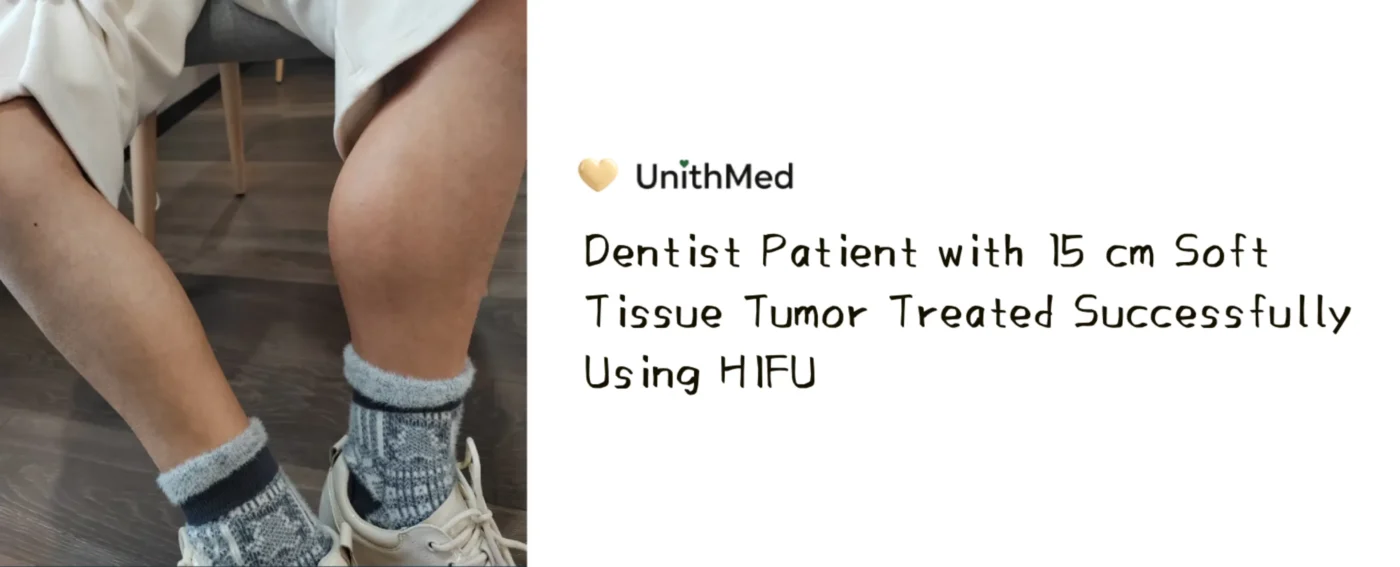
Ms. Tang is a meticulous dentist and aromatherapy enthusiast who values body integrity and aesthetic appearance. A soft tissue tumor in the lower leg, which had developed over 11 years, almost disrupted her calm and composed life.
Ultimately, HIFU treatment for soft tissue tumor helped her achieve effective tumor ablation while preserving her elegance and body integrity through a non-invasive approach.
A Silent 10-Year Growth
Eleven years ago, Ms. Tang noticed a slight swelling in her left calf. She could feel a small, painless lump under the skin. Since it did not affect her daily work or walking, she did not pay much attention to it.
Over time, the mass gradually enlarged and began to cause a feeling of heaviness and pain after activity. Her left leg also became swollen after walking, which increasingly affected her daily life.
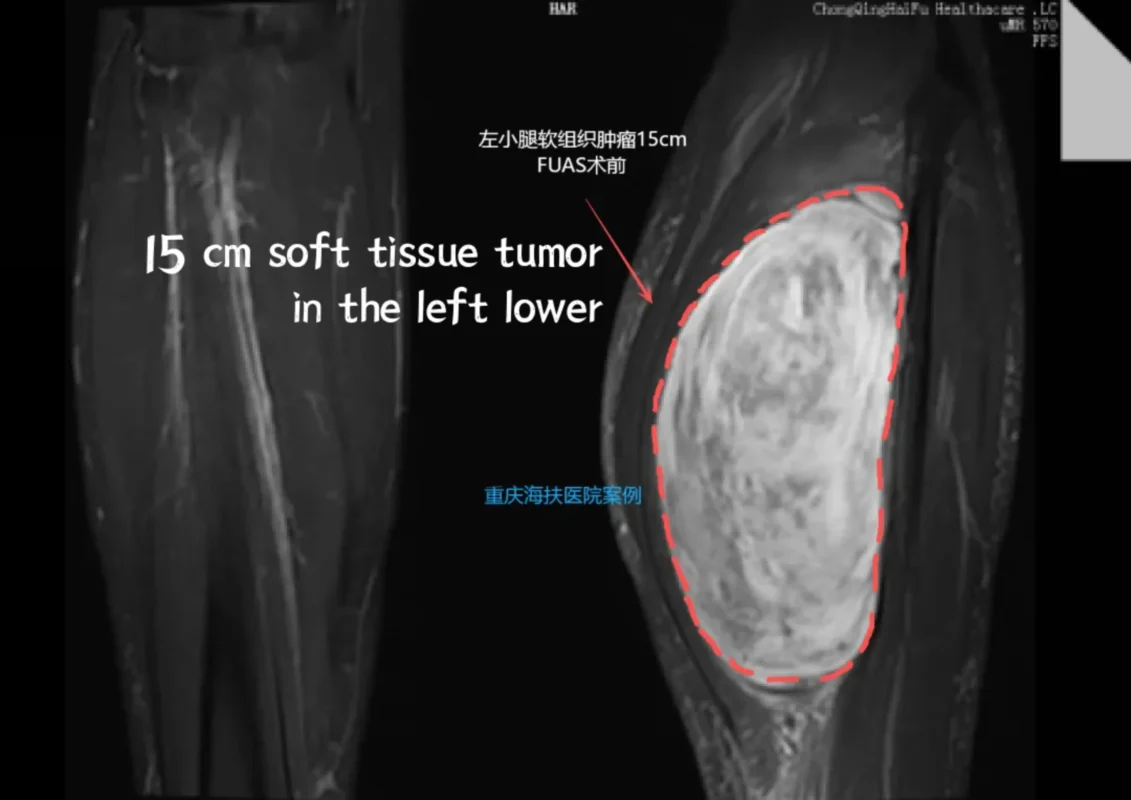
In 2019, she underwent medical imaging. A CT scan revealed a space-occupying lesion in the left lower leg, with a maximum diameter of 13.7 cm. Doctors recommended an immediate biopsy and surgical removal, warning that there was even a risk of amputation.
Due to her strong concern for aesthetics and fear of surgical risks, Ms. Tang refused surgery. She instead tried aromatherapy and essential oil therapy, which slightly relieved the discomfort, but the tumor remained and the pulling pain in her foot persisted.
Non-Invasive HIFU Treatment for Soft Tissue Tumor Instead of Surgery
In March 2026, Ms. Tang visited our hospital for further treatment. MRI showed a lesion measuring 15.3 × 6.3 × 6.9 cm in the upper-middle third of the left calf. Clinical evaluation suggested a soft tissue tumor, most likely a schwannoma.
After a comprehensive assessment, Professor Chen Wenzhi’s team developed a personalized HIFU treatment for soft tissue tumor, using High-Intensity Focused Ultrasound (HIFU) non-invasive ablation.
This non-invasive tumor treatment does not require surgery or incisions. It uses focused ultrasound energy delivered from outside the body to precisely destroy tumor tissue while preserving surrounding structures. It leaves no scar and aligns with the patient’s preference for a minimally invasive solution.
Under sedation and pain control, the procedure was successfully completed. Post-treatment imaging showed that most of the lesion had been ablated, and the skin surface remained completely intact without any scarring.
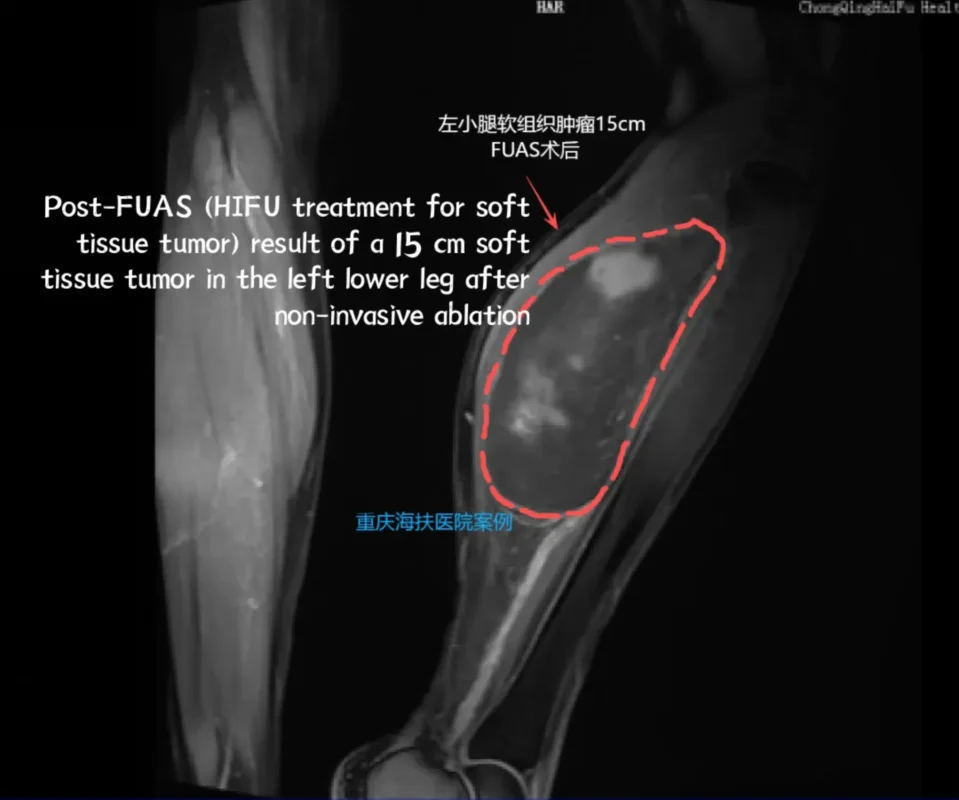
The patient reported only mild pain after the procedure, which was quickly relieved with ice application. Mild swelling appeared the next day, but limb movement and sensation remained normal. A follow-up MRI confirmed satisfactory ablation results, and she was discharged smoothly.
Doctor’s Comment
Professor Chen noted that schwannomas are usually benign and grow slowly, but may compress nerves when enlarged, causing discomfort. HIFU treatment for soft tissue tumor can precisely target the lesion while avoiding surgical scars and potential risks, making it an ideal option for patients who value aesthetics or are afraid of surgery.
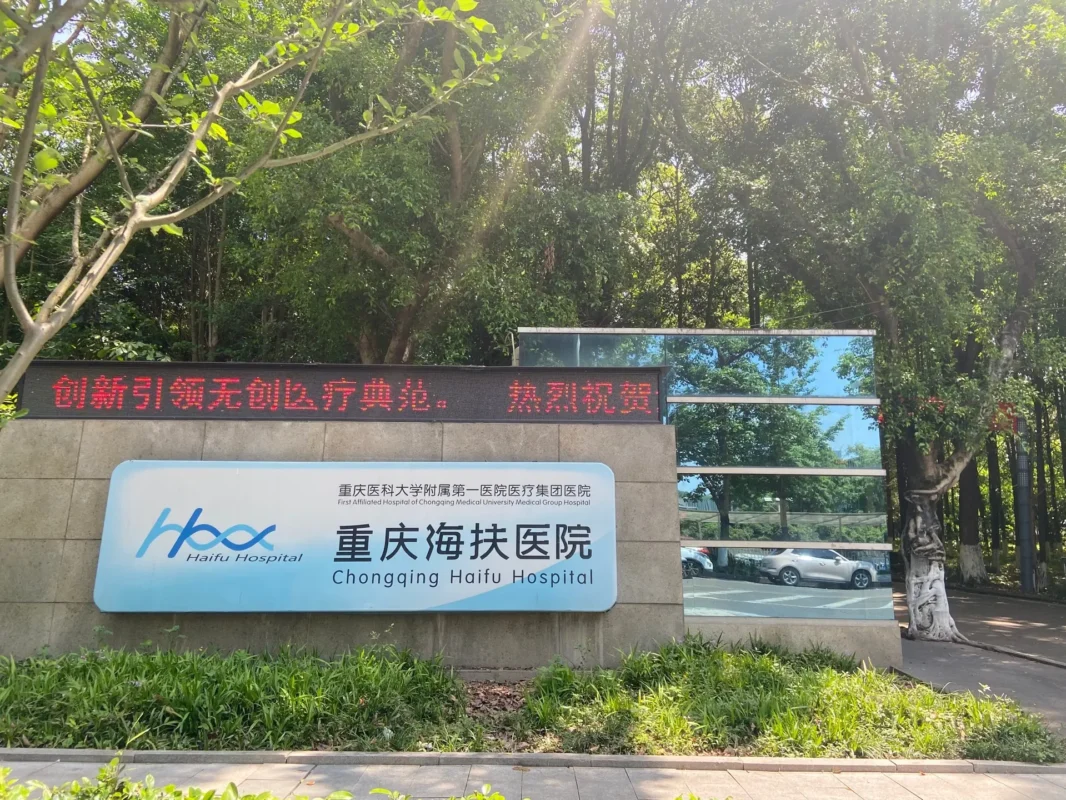
Chongqing China
HaiFu Hospital
Chongqing Haifu Hospital is a specialized medical institution focusing on the clinical application of High-Intensity Focused Ultrasound (HIFU)....
Latest review
Very efficient!
Came from Russia for HIFU treatment. Doctors are nice, recovery fast. Good hospital.

Post-Operative Advice
Attending physician Dr. Xu Ruidan reminded that mild swelling and pain after treatment are normal reactions. She also emphasized that any unexplained mass in the body should not be ignored. Early diagnosis and early treatment are key to protecting health while preserving quality of life.
This case further demonstrates the effectiveness of HIFU treatment for soft tissue tumor as a non-invasive approach for managing large and complex lesions. Compared with traditional surgery, HIFU offers the advantages of no incision, minimal recovery time, and reduced risk of complications. It is especially suitable for patients who prioritize functional preservation and aesthetic outcomes. Ongoing follow-up is recommended to monitor long-term stability and ensure optimal recovery results.
FAQS
What is HIFU treatment for soft tissue tumor?
HIFU treatment for soft tissue tumor is a non-invasive therapy that uses High-Intensity Focused Ultrasound to precisely deliver focused energy into the tumor tissue. The thermal effect created by ultrasound energy can ablate targeted areas while minimizing damage to surrounding healthy structures.
Unlike traditional surgery, HIFU does not require an incision, which helps reduce scarring and may allow faster recovery for selected patients.
Can HIFU treatment replace surgery for soft tissue tumors?
HIFU is not suitable for every type of soft tissue tumor and cannot replace surgery in all cases. Whether HIFU is an appropriate treatment option depends on factors such as tumor location, size, imaging characteristics, and the relationship between the tumor and surrounding tissues.
A comprehensive evaluation with MRI imaging and specialist consultation is required before deciding on treatment.
Was this 15 cm soft tissue tumor treated successfully with HIFU?
In this case, Ms. Tang had a large soft tissue tumor in her left calf measuring approximately 15 cm. After a detailed medical assessment, the treatment team performed HIFU ablation.
Post-treatment imaging showed satisfactory ablation results, with most of the lesion successfully treated. The patient experienced only mild discomfort and swelling after treatment, while limb movement and sensation remained normal.
What are the advantages of HIFU compared with traditional surgery?
Compared with traditional surgical removal, HIFU treatment offers several potential advantages for selected patients:
1.No surgical incision
2.No visible surgical scar
2.Reduced damage to surrounding tissues
4.Shorter recovery period
5.Preservation of normal body appearance and function
However, treatment selection should always be based on individual medical conditions.
Is HIFU treatment painful?
During HIFU treatment, patients usually receive appropriate sedation and pain management to improve comfort. After treatment, some patients may experience mild pain, swelling, or a temporary feeling of discomfort, which usually improves with supportive care.
The level of discomfort varies depending on tumor location, size, and individual response.
How long does recovery take after HIFU treatment for soft tissue tumor?
Recovery after HIFU is generally faster compared with invasive surgery because there is no surgical incision. Many patients can return to normal daily activities within a short period, depending on the treated area and individual condition.
Regular follow-up imaging is recommended to evaluate treatment response and long-term changes.
Is HIFU suitable for a large soft tissue tumor?
Tumor size alone does not determine whether HIFU is suitable. Large soft tissue tumors may require detailed evaluation, including MRI assessment, to determine whether the tumor can be safely accessed and treated with focused ultrasound energy.
This case demonstrates that selected large lesions may be considered for HIFU treatment after specialist evaluation.
How can international patients receive HIFU treatment evaluation?
International patients can provide their medical records, MRI images, and previous examination reports for an initial evaluation. The medical team can review the information and determine whether further consultation or an in-person assessment is recommended.
What types of soft tissue tumors can be treated with HIFU?
HIFU has been explored for selected soft tissue tumors, including certain benign and locally aggressive lesions. The suitability of treatment depends on tumor characteristics, location, and imaging evaluation.

 Treatments
 Non-invasive
 Pain Management
 Health Check
 Traditional Chinese Medicine
 Dentistry
 Ophthalmology
 Book Free Consultation