


China Medical Travel Guide
Medical Tourism From UK to China – A Complete Guide
This article is part of our Global Medical Travel to China hub, which provides structured guidance for patients from 50+ countries worldwide.
👉 Go to full hub: Medical Travel to China
Table of Contents
- Breaking down how the NHS in the UK actually works
- Digging into the structural reasons behind long NHS waiting times
- Waiting can lead to irreversible health damage and multiple hidden costs
- Uncertainty in NHS waiting times is pushing the rise of alternative healthcare routes, with medical travel to China becoming a practical option
- Why China is included in the range of options?
- Full end-to-end treatment process for UK patients receiving care in China
- Medical visa policies are continuing to ease, removing one of the biggest time barriers to cross-border medical treatment.
- Direct comparison of time structure between the healthcare systems in China and the UK
Ten years ago, very few people in the UK would even think about looking into going abroad for treatment. The NHS was widely accepted as a reliable public system that covers everyone, with a simple structure: GP for minor issues, and referrals for more serious conditions. But once you actually reach the stage where you need detailed scans, specialist assessment, or planned surgery, the experience changes completely. You may know exactly what treatment you need, but there is no clear way to know when the process will actually begin.
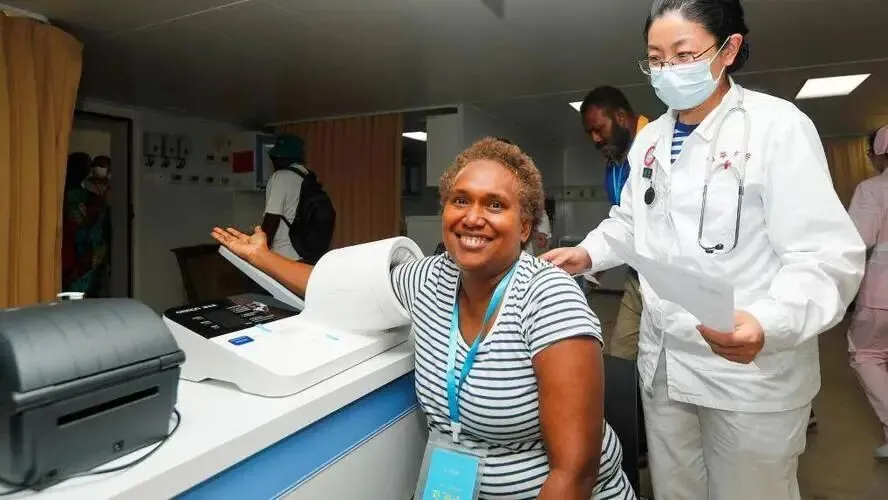
It is this gap—having a clear diagnosis but no clear timeline—that has been quietly building pressure for many patients. As a result, Medical Tourism from the UK to China is no longer just a long-tail keyword that appears in search engines. It is gradually becoming a real, practical option that more patients with chronic conditions, orthopedic issues, cancer-related concerns, eye diseases, or neurological conditions are seriously considering and in some cases actively choosing.
1.Breaking down how the NHS in the UK actually works
Objectively speaking, the UK’s National Health Service is built on a very clear and structured design. The GP (general practitioner) acts as the main entry point for all medical care. After an initial diagnosis, patients are referred to the relevant specialist, and hospitals then handle tests, surgery, and other treatment procedures. In theory, the system of staged care is well organized and complete.
But from the patient’s real experience, the biggest issue is not that the process is hard to understand—it is that the entire timeline is broken into many separate waiting stages.
GP visits, specialist appointments, scans, pre-surgery assessments, and operating room scheduling are all handled as separate queues. Each step has its own priority rules and waiting list. The problem is not a lack of hospitals, equipment, or doctors in the UK. The real issue is how limited medical resources are allocated, which directly determines where a patient sits in a very long waiting line.
Most patients end up sharing the same feeling: the treatment plan is already clear, but when it will actually begin is completely out of their control.
2.Digging into the structural reasons behind long NHS waiting times
Many people simply blame long NHS waiting times on not having enough doctors or not enough equipment. In reality, the backlog in the UK healthcare system is a structural result that has built up over many years, and it is not caused by a single factor.
High-quality medical resources are heavily concentrated in large public hospitals. There are hard limits on the number of specialist doctors and operating theatre capacity. At the same time, the public system must strictly prioritise patients based on how serious their condition is. Emergency cases and life-threatening conditions always come first.
If your condition is not classified as the highest level of urgency, you will automatically be placed on a long waiting list.
From a public healthcare management point of view, this allocation system is a reasonable way to ensure fairness for everyone. But for ordinary patients with chronic conditions or planned (elective) surgeries, it often turns into a waiting period that keeps getting longer, without a clear end date.
3.Waiting can lead to irreversible health damage and multiple hidden costs
Not all illnesses are significantly affected by long waiting times, but there are five main types where delays can have a much bigger impact: MRI / CT imaging scans, degenerative orthopedic conditions, cancer screening and assessment, chronic neurological diseases, and specialist eye conditions.
These conditions share one key feature: waiting for treatment does not just reduce the patient experience—it can actually change the final treatment outcome.
Based on official 2026 NHS waiting time statistics in the UK,
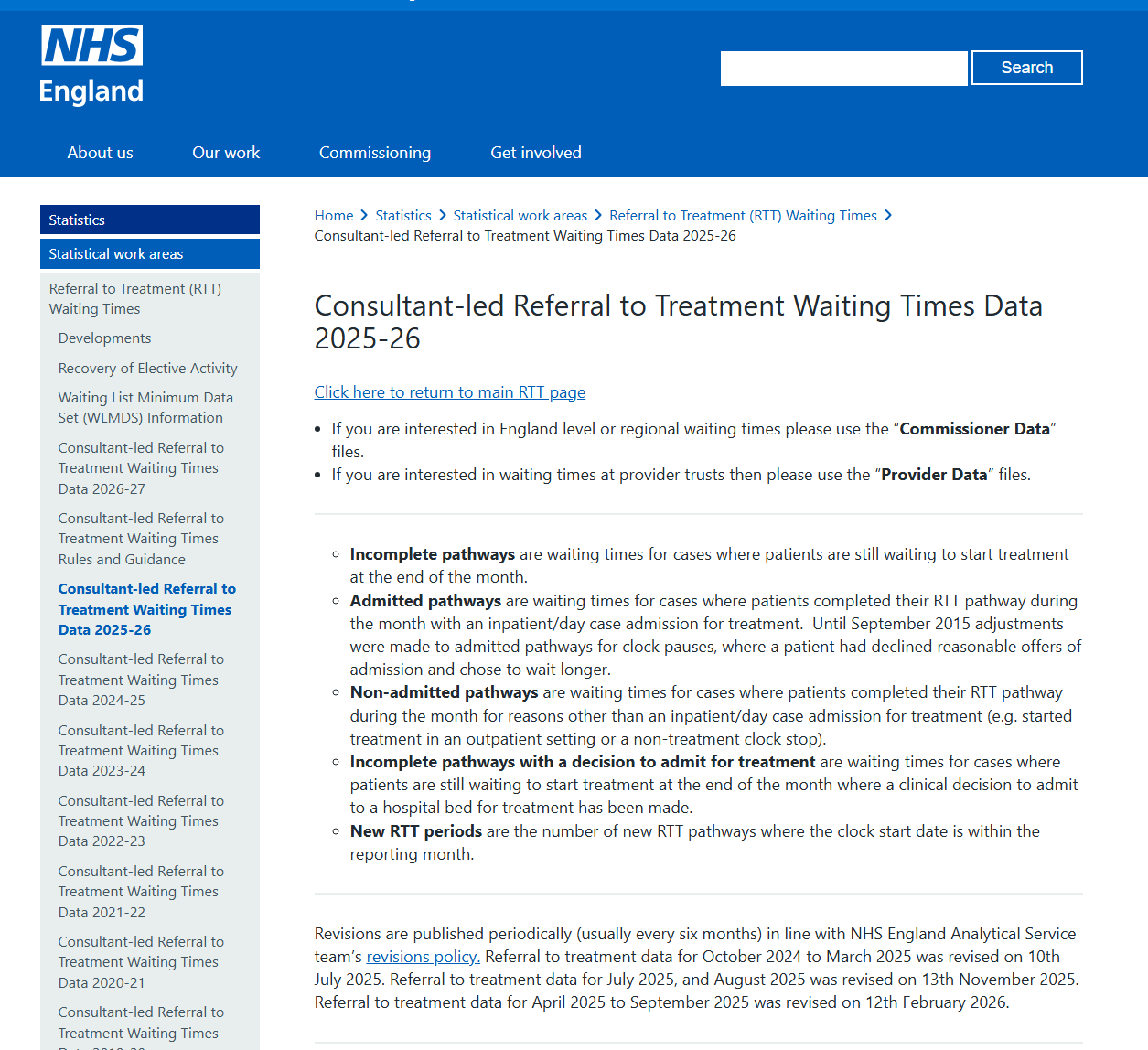
the table below clearly shows the typical waiting periods for each condition, as well as the potential irreversible health damage caused by long delays:
| Disease Category | Common Conditions Covered | Average NHS Non-Emergency Waiting Time (UK) | Irreversible Health Damage Caused by Prolonged Waiting |
|---|---|---|---|
| Imaging Scan (MRI/CT) | Spine, Brain, Internal Organs, Fundus OCT Scan | Official target: 6 weeks; England actual average 11.5 weeks, 30% of patients wait over 3 months | Small lesions progress continuously, early lesions turn into chronic intractable injuries, missing the optimal intervention window |
| Orthopedics / Chronic Pain | Herniated disc, meniscus tear, hip & knee replacement, degenerative joint pain | GP referral: 2–4 weeks; elective surgery median 20–30 weeks; chronic pain maximum waiting up to 1 year | Muscle atrophy, joint stiffness, compensatory bilateral bone damage, doubled rehabilitation cycle after surgery, long-term reliance on painkillers |
| Cancer Screening & Assessment | Biopsy & staging test for suspected malignant lesions in breast, lung, digestive tract, fundus | Fast-track: 2–4 weeks; ordinary suspicious lumps 8–16 weeks | Carcinoma in situ develops into invasive / metastatic cancer, minimally invasive treatment fails, obvious decline in 5-year survival rate |
| Neurological Disorders | Multiple sclerosis, Parkinson’s disease, unexplained dizziness, optic nerve lesions | Neurology first consultation 24–36 weeks, additional 10 weeks waiting for matching brain imaging | Permanent demyelination of nerves, irreversible decline of limb function, eyesight and balance ability |
| Ophthalmology Specialist | Cataract, glaucoma, retinal tear, macular degeneration | GP referral to ophthalmology department 12–24 weeks, complex fundus surgery waiting 6–12 months | Continuous high intraocular pressure leads to optic nerve atrophy, retinal detachment, inducing permanent vision loss or even blindness |
This is especially true for orthopedic, eye-related, and chronic pain conditions, where longer waiting times often lead to a more obvious decline in physical function. For cancer and neurological diseases, there are also strict treatment windows, and waiting for several months can even completely change the original treatment plan from minimally invasive or conservative approaches to more aggressive options.
Most patients at the beginning tend to misunderstand the situation, seeing waiting simply as “delayed treatment.” But they often miss a key medical reality: the condition does not stay still. Long waiting periods are actually a continuous process where health is gradually affected and hidden costs keep building up.
Physical impact:
symptoms such as blurred vision, limb pain, and numbness continue to worsen. Bones, nerves, and eye tissues may also experience permanent degeneration.
Psychological impact:
uncertainty over a long period often leads to ongoing anxiety, poor sleep, and depression. This stress can then make physical symptoms worse, creating a negative cycle.
Financial hidden costs: reduced vision or mobility can make it difficult to work normally, leading to long-term spending on painkillers and eye-care medication. In some cases, patients who cannot tolerate NHS waiting times end up turning to private healthcare in the UK, which can result in very high medical expenses.
The real cost of waiting is never just the number of days. It is whether a patient’s health can remain stable during that period, and whether the extra financial burden is still manageable. When vision or physical function continues to decline, many UK patients begin to move away from a single public system and look for alternative care options that balance both time and cost.
4.Uncertainty in NHS waiting times is pushing the rise of alternative healthcare routes, with medical travel to China becoming a practical option
When long waiting lists, ongoing health deterioration, and high private healthcare costs combine and reach a critical point, most UK patients do not completely abandon the NHS. Instead, they start looking for a more predictable and integrated treatment path where timing is clearer and overall costs are more manageable.
Below, we use a common high-demand procedure in the UK—single-eye cataract surgery—as a standard comparison example. A full UK vs China comparison table is provided, covering waiting time, treatment cost with and without insurance, and total cross-border medical travel expenses. This helps show the practical differences between the two options in a clear way.
(Exchange rate reference: 1 GBP ≈ 9 RMB, 2026 estimate; based on standard public service level, excluding premium or private upgrade services.)
| Comparison Dimension | Option 1: UK Patients Receiving Treatment at International Hospitals in China | Option 2: UK NHS Public Healthcare System | Option 3: UK Private Ophthalmology (No Private Medical Insurance) | Option 4: UK Private Ophthalmology (With Private Medical Insurance) |
|---|---|---|---|---|
| Full Waiting Period | 3–5 working days for remote pre-assessment; complete examinations, surgery and follow-up within 3–7 days after arrival; total travel cycle only 10 days | 12–24 weeks for GP referral to ophthalmology, plus another 11–20 weeks for surgery; total cycle 6–10 months | 2–8 weeks for consultation booking; full examinations and surgery can be completed within 4 weeks at the earliest | 3–6 weeks for insurance approval; total consultation and surgery cycle 1–2 months |
| All-Inclusive Medical Fee (Standard Intraocular Lens) | Full package 13,500–18,000 CNY, equivalent to £1,500 (including full pre-op examinations, surgery, intraocular lens, half-year post-op follow-ups and eye drops) | £0 (Free for all residents) | Full treatment package £2,495–£3,995, average £3,200 | 80%–90% covered by insurance; patient self-pay £300–£700 |
| Mandatory Additional Expenses | London round-trip flight £480; short-term medical visa £130; 10-day accommodation & catering £420; local transportation £100; total travel costs £1,130 | No surgery charges; annual average £150 for regular eye care and pain relief medication | Extra £50–£250 for fundus OCT & angiography, separate payment for post-op medicine; additional total £300 | Annual private insurance premium £1,200–£1,800; annual compensation cap only £500; complex eye diseases & premium lenses are mostly excluded |
| Total One-Off Comprehensive Expense | Medical £1,500 + Travel £1,130 = £2,630 (one-time payment only) | £150 (annual medication cost only) | £3,500 | Annual fixed cost £2,000 (premium + self-pay fees, payable every year) |
| Core Drawbacks | Requires international travel, but no segmented waiting queues; full closed-loop treatment finished within 10 days, preventing progressive vision damage from eye lesions | Extremely long waiting time of 6–10 months; glaucoma and macular degeneration tend to worsen continuously, carrying permanent blindness risk | Treatment timeline is predictable, yet total cost is 1.3 times higher than the China option, unaffordable for average working-class residents | High annual fixed insurance premiums with strict compensation limits; complex fundus conditions still cannot secure prompt surgery |
| Treatment Prognosis Guarantee | Centralized continuous treatment resolves eye lesions in a short period, avoiding irreversible vision damage caused by months-long waiting | Lesions progress during waiting period, some patients miss the window for minimally invasive treatment | Fast treatment speed with heavy financial burden | Narrow insurance coverage; most premium treatment items are non-reimbursable, delays remain a risk |
The trade-offs between the four main treatment options become very clear:
The NHS public system does not charge for surgery, but waiting times of six months or more can lead to irreversible vision damage. For progressive eye conditions such as glaucoma or retinal disease, the risk is particularly high.
Private eye care in the UK does not require long waiting times, but without insurance, the total cost can reach around £3,500, which is significantly higher than the overall cost of going to China for treatment. Even with private insurance, patients still need to pay annual premiums of over a thousand pounds, and coverage is often limited, with strict rules on what treatments are included.
Medical travel to China requires extra costs such as flights and accommodation, but the total one-time expense is still lower than UK private treatment without insurance. The key advantage is time certainty: the full process—from evaluation to surgery and follow-up—can be completed in around 10 days, without the risk of waiting for months while the condition continues to worsen.
Driven by real market demand, medical travel from the UK to China is no longer just an online idea. It has become a realistic option for many patients with eye conditions, orthopedic problems, cancer, and neurological diseases. For most patients, the decision to seek cross-border treatment is not simply about preferring one country’s medical system over another. It is about balancing two key factors: treatment time certainty and total financial cost. Many are willing to travel abroad for a short period in exchange for a clearer, more predictable treatment process and lower risk of health deterioration.
5.Why China is included in the range of options?
UK patients include China in their cross-border healthcare options not because of a single leading medical technology, but because of a completely different overall system and treatment process.
Many official international hospitals in China have dedicated service channels for foreign patients. Consultations, medical imaging, specialist reviews, surgery scheduling, and post-operative recovery can often be arranged within a tightly coordinated timeframe. This is very different from the NHS system, where each step is handled separately and patients often have to wait between each stage of care.
For overseas patients, the most noticeable difference is not how advanced the equipment is, but how connected the whole treatment process feels. There is less need for repeated appointments and long gaps between each stage of treatment.
6.Full end-to-end treatment process for UK patients receiving care in China
Compared with the NHS’s step-by-step and often long waiting process, medical treatment in China offers a more continuous, closed-loop care pathway, with no long gaps between stages.
Step1:Pre-arrival document submission: patients upload their UK GP reports, CT/MRI scans, and existing medical records.
Step2:Remote pre-assessment: relevant specialists at the hospital review the case online and provide a personalised treatment plan, including an estimated overall timeline.
Step3:Travel coordination and planning: once the treatment plan is confirmed, support teams help arrange medical visas, flight bookings, and hospital admission or bed reservations in one process. In recent years, improvements in travel and visa procedures have significantly reduced preparation time, making the overall decision and travel process much faster and more efficient.
Step4:Continuous in-hospital treatment: after arriving in China, patients go through follow-up imaging checks, face-to-face consultations, surgery if needed, and post-operative care in a connected sequence. All stages are coordinated within the same treatment cycle, without separate waiting lists between steps.
Overall, the entire process—from initial assessment to recovery—moves forward in a continuous flow, avoiding the repeated delays and staged waiting that are common in public healthcare systems.
7.Medical visa policies are continuing to ease, removing one of the biggest time barriers to cross-border medical treatment.
A few years ago, the long and complicated visa application process was one of the biggest barriers preventing UK patients from coming to China for medical treatment. Today, however, travel and immigration policies have continued to improve, significantly reducing this key time constraint.
UK passport holders can apply for short-term visas suitable for medical visits. Official international hospitals in China can also provide supporting documents such as medical invitation letters and treatment certificates, which help speed up the approval process. In some cases, entry procedures can be arranged much more quickly.
These policy improvements have fundamentally changed the time structure of medical travel to China. What once required months of advance planning can now be started much more quickly, greatly reducing the overall time cost of the decision process.
8.Direct comparison of time structure between the healthcare systems in China and the UK
Putting the two healthcare systems on a simple horizontal timeline makes the difference in their underlying structure very clear:
The UK NHS follows a fragmented, step-by-step care model. GP visits, referrals, diagnostic tests, and surgery are all managed in separate queues. Between each stage, there are unpredictable waiting periods. As a result, the overall treatment timeline is difficult to forecast.
In contrast, international patient pathways in China’s hospitals are designed as a more continuous and coordinated process. Assessment, testing, treatment, and recovery are arranged in a connected flow, with minimal gaps between stages. The full treatment timeline can usually be estimated from the very beginning.
The key difference between the two systems is not how fast or slow they are in simple terms, but whether the entire process is broken into separate, uncontrollable waiting stages or managed as one continuous treatment pathway.
If you are living in the UK and struggling with long NHS waiting times for MRI scans, orthopedic surgery, cancer assessments, neurological consultations, or eye surgery, and you are worried that your condition or vision may continue to worsen during the waiting period, it may be worth looking into an integrated treatment pathway for UK patients receiving care in China.
With dedicated international patient services, simplified medical visa arrangements, and a continuous treatment model without fragmented waiting stages, medical travel to China offers a practical, real-world option for people affected by long NHS queues.
This article is part of our Global Medical Travel to China hub, which provides structured guidance for patients from 50+ countries worldwide.
👉 Go to full hub: Medical Travel to China
FAQS
1. Is medical travel from the UK to China safe?
Yes, when done through licensed international hospitals and regulated medical channels. Many hospitals in China that accept foreign patients follow international clinical standards and have dedicated departments for overseas patients, including English-speaking medical staff and structured treatment protocols.
2.How long does medical treatment in China usually take?
In many cases, the full process—from medical evaluation to treatment and follow-up—can be completed within days to a few weeks, depending on the condition. This is significantly shorter than typical waiting times in the UK NHS system for non-emergency procedures.
3.Do I need a visa for medical treatment in China?
Yes. UK passport holders usually need a short-term medical or visitor visa. However, approved international hospitals can provide official invitation letters and medical documents to support and speed up the visa application process.
4.Is it cheaper to get treatment in China compared to UK private healthcare?
In many cases, yes. Even when including flights and accommodation, the total cost of treatment in China can be lower than private healthcare in the UK, especially for surgeries such as cataract operations, orthopedic procedures, or diagnostic assessments.
5.What types of conditions are most suitable for treatment in China?
Common cases include eye surgery (such as cataracts), orthopedic conditions, cancer evaluations, neurological issues, and chronic pain conditions where waiting time in the UK can significantly affect outcomes.
6.Will I still be able to continue NHS care after treatment abroad?
Yes. Patients can still return to the NHS system after receiving treatment abroad. Medical travel does not cancel or replace NHS eligibility, and follow-up care can still be managed locally if needed.
7.How do I start the process for medical travel to China?
You can get a free consultation through Unithmed.
After a treatment plan is confirmed, patients receive support with travel arrangements, visa documents, and hospital booking before arriving in China for treatment.

 Treatments
 Non-invasive
 Pain Management
 Health Check
 Traditional Chinese Medicine
 Dentistry
 Ophthalmology
 Book Free Consultation