

 Dental Care
 Gynecology
 Eye Care
 HealthCheck
 Orthopedics
 Pain Care
 TCM
TCMTeam Leader of English-speaking Medical
Uterine Fibroid Treatment with HIFU in China: A Non-Invasive Alternative to Surgery
Your essential guide to non-surgical uterine fibroid treatment with HIFU in China — covering technology, costs, eligibility, and end-to-end international patient care.

Authored by Queeny
Estimated reading time: 20 minutes
ON THIS PAGE:
- Understanding Uterine Fibroids
- Uterine Fibroid Treatment Options
- How Does HIFU Work for Uterine Fibroids?
- High-Intensity Focused Ultrasound Technology
- Thermal Ablation of Fibroid Tissue
- Precision Protection of Surrounding Tissue
- Why Choose HIFU Instead of Traditional Surgery?
- Who May Be Suitable for HIFU Fibroid Treatment?
- HIFU Fibroid Treatment Cost: China Compared with Other Countries
- Real Patient Case: HIFU Treatment for Uterine Fibroids
- HIFU Treatment Experience in China
- Your HIFU Treatment Journey in China
- What Is Included in Our International Patient Support?
- Frequently Asked Questions
A New Non-Invasive Treatment Option for Women with Uterine Fibroids
Uterine fibroids are one of the most common benign conditions affecting women. Many women with fibroids do not experience symptoms, but others may develop problems such as heavy menstrual bleeding, pelvic pressure, abdominal discomfort, or difficulties related to fertility. When symptoms begin to affect daily life, choosing the right uterine fibroid treatment becomes an important decision.
For many women, surgery is not the only concern — the recovery process, surgical scars, possible risks, and concerns about preserving the uterus are also important factors. Some patients prefer to explore treatment options that can address fibroids while avoiding traditional surgical procedures.
High-Intensity Focused Ultrasound (HIFU) is a non-invasive treatment option for selected patients with uterine fibroids. Instead of removing fibroids through an operation, HIFU uses focused ultrasound energy to heat and destroy targeted fibroid tissue from outside the body. Because there are no surgical incisions, many patients experience a shorter recovery period compared with traditional surgical procedures.
For international patients considering uterine fibroid treatment in China, arranging medical care in another country can feel complicated. Unithmed helps patients throughout the process, including reviewing medical reports before travel, coordinating hospital appointments, providing translation support, and assisting with follow-up communication after treatment.
1. Understanding Uterine Fibroids
Uterine fibroids, also called uterine leiomyomas or myomas, are non-cancerous growths that develop from the muscle tissue of the uterus. They can be different in size, number, and location. Some women may have small fibroids that do not cause noticeable problems, while others may develop larger fibroids that affect their quality of life.
Uterine fibroids are very common among women, especially during their reproductive years. Studies suggest that fibroids are clinically present in approximately 25% of women of reproductive age, and their prevalence increases with age, reaching around 70% to 80% by age 50 in some populations. However, many fibroids remain undetected because they do not cause noticeable symptoms.
This information is supported by the National Center for Biotechnology Information (NCBI).
The symptoms of uterine fibroids often depend on where the fibroids are located and how large they become. Common symptoms include heavy or prolonged menstrual bleeding, pelvic pressure, lower abdominal fullness, back discomfort, frequent urination, and pelvic pain. In some cases, fibroids may also affect fertility or pregnancy planning.
Not every fibroid requires immediate treatment. Doctors usually consider several factors before recommending a treatment plan, including the size and location of the fibroids, the severity of symptoms, age, future pregnancy plans, and overall health condition.
For women who need treatment, understanding the available options is the first step. Today, uterine fibroid treatment includes several approaches, ranging from medication and surgery to minimally invasive procedures and non-invasive treatments such as HIFU.
2. Uterine Fibroid Treatment Options
The best treatment for uterine fibroids depends on each patient’s condition. A doctor will usually evaluate the fibroid characteristics, symptoms, and personal needs before recommending the most suitable option.
2.1 Medication Treatment
Medication can help some women manage symptoms caused by uterine fibroids, especially heavy menstrual bleeding or hormone-related symptoms. However, medication usually does not remove fibroids completely. Instead, it is often used to control symptoms or prepare patients for other treatments when needed.
2.2 Surgical Treatment
Surgery is still an important treatment option for many women with symptomatic fibroids.
A myomectomy removes fibroids while keeping the uterus, which may be considered for women who wish to preserve fertility. A hysterectomy removes the uterus completely and may be recommended in certain situations, especially when other treatments are not suitable.
Although surgery can effectively treat fibroids, some women prefer alternatives because they want to avoid surgical incisions, longer recovery periods, or changes to their daily life.
A myomectomy removes existing fibroids but does not completely eliminate the According to the American College of Obstetricians and Gynecologists (ACOG), new fibroids may develop after myomectomy because the uterus remains in place.possibility of future fibroid development.
Because the uterus remains in place, new fibroids may develop over time in some patients. In contrast, hysterectomy removes the uterus and is considered a definitive treatment because uterine fibroids cannot develop after the uterus has been removed.
Although surgery can effectively treat fibroids, some women prefer alternatives because they want to avoid surgical incisions, longer recovery periods, or changes to their daily life.
2.3 Uterine Artery Embolization (UAE)
Uterine artery embolization is a minimally invasive procedure that reduces blood flow to fibroids, causing them to gradually shrink. It can be an option for some patients, but suitability depends on factors such as fibroid characteristics and future pregnancy plans.
2.4 HIFU Treatment for Uterine Fibroids
HIFU for fibroids provides another treatment option for selected patients who are looking for a non-surgical approach. During HIFU treatment, focused ultrasound energy is delivered precisely to the fibroid area, creating heat that damages the targeted tissue while reducing the effect on surrounding healthy tissue.
Unlike surgery, HIFU does not require an incision. This makes it an option worth considering for patients who want uterine fibroid treatment without traditional surgery. However, HIFU is not suitable for every patient, and medical evaluation with imaging examinations is needed before making a decision.
3. How Does HIFU Work for Uterine Fibroids?
High-Intensity Focused Ultrasound (HIFU) is a non-invasive treatment technology that uses focused ultrasound energy to treat targeted tissue inside the body without making surgical cuts. For uterine fibroids, HIFU aims to destroy fibroid tissue by creating controlled heat at a precise location while limiting the effect on surrounding healthy tissues.
Unlike traditional surgery, HIFU treatment does not require an incision. The ultrasound energy is delivered from outside the body and focused on the fibroid through real-time imaging guidance. Doctors use imaging information to locate the fibroid accurately and determine the treatment area before delivering ultrasound energy.
*Why Is HIFU Not Commonly Mentioned in Some U.S. Patient Guidelines?
The availability and clinical use of HIFU for uterine fibroids vary between countries. Some U.S. medical guidelines and patient resources, including those from the American College of Obstetricians and Gynecologists (ACOG), focus mainly on treatment options that are widely available within the U.S. healthcare system and commonly used in local clinical practice.
HIFU, including MRI-guided and ultrasound-guided approaches, has been developed and used internationally, with particularly extensive clinical experience in countries such as China. The suitability of HIFU depends on factors including fibroid characteristics, available technology, physician experience, and local medical regulations.
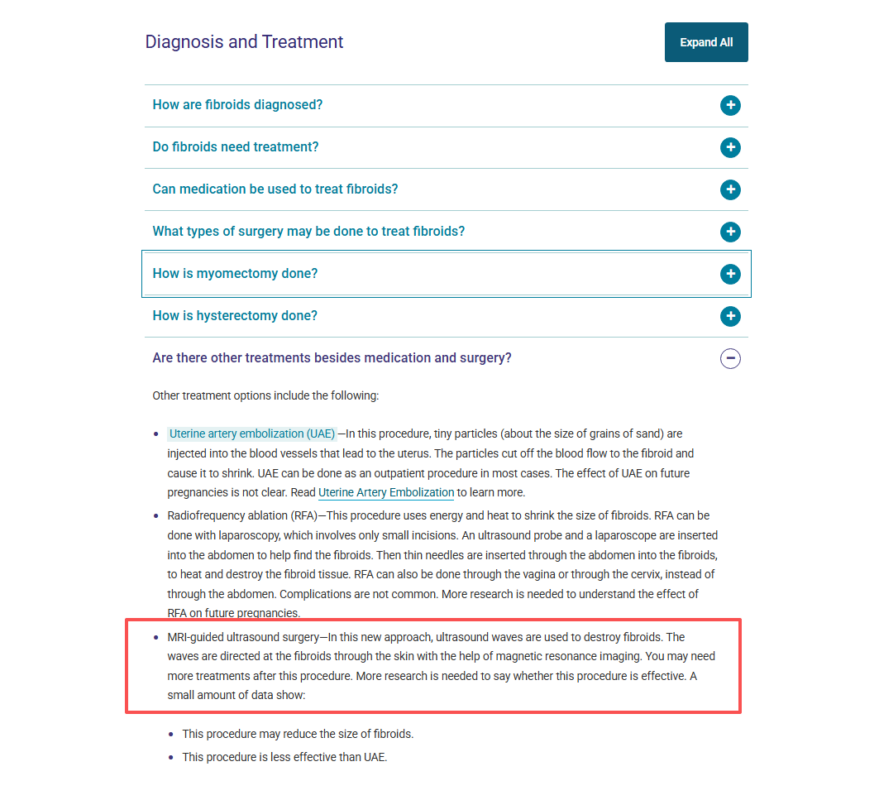
Different HIFU systems may use different imaging guidance methods. Some HIFU treatments use Magnetic Resonance Imaging (MRI) guidance, known as MR-guided Focused Ultrasound Surgery (MRgFUS), while other systems use ultrasound imaging guidance during treatment. Both approaches use focused ultrasound energy to create controlled thermal effects within the targeted fibroid tissue.
4. High-Intensity Focused Ultrasound Technology
HIFU stands for High-Intensity Focused Ultrasound. It uses high-frequency ultrasound waves that can pass through the body without making an opening in the skin. When multiple ultrasound waves are accurately focused on one specific area, energy builds up at that point and produces heat.
During uterine fibroid treatment, doctors use imaging guidance, such as MRI or ultrasound, to identify the exact location of the fibroid. The HIFU system then delivers focused ultrasound energy to the selected area. This process is carefully controlled to treat the fibroid while avoiding unnecessary exposure to nearby organs and tissues.
One of the key features of HIFU is that treatment happens from outside the body. There is no need to insert surgical instruments into the uterus, and there are no traditional surgical wounds. This is why HIFU is considered a non-invasive fibroid treatment option for appropriately selected patients.
The goal of HIFU is not to physically remove the fibroid immediately. Instead, the treatment causes changes inside the fibroid tissue, and the body gradually absorbs the treated tissue over time. The response after treatment can vary depending on the patient’s condition and the characteristics of the fibroid.
5. Thermal Ablation of Fibroid Tissue
The main mechanism of HIFU treatment is thermal ablation. When focused ultrasound energy reaches the target area, the temperature inside the fibroid tissue increases. When the temperature reaches a certain level, the targeted cells are damaged and lose their ability to function normally.
This process is known as coagulative necrosis. The treated fibroid tissue remains inside the body but gradually shrinks or is absorbed through the body’s natural healing process.
Compared with treatments that physically remove fibroids, HIFU focuses on treating the fibroid from within. This approach can reduce the need for surgical removal while helping preserve the structure of the uterus in suitable patients.
The treatment effect depends on many factors, including fibroid size, location, blood supply, and individual response. Therefore, a detailed evaluation before treatment is an important step in determining expected outcomes.
6. Precision Protection of Surrounding Tissue
One of the main advantages of HIFU technology is its ability to focus energy on a specific target area. Because the ultrasound energy is concentrated at the treatment point, tissues that the energy passes through receive much less energy than the focal area.
During treatment, doctors carefully monitor the process through imaging guidance. This helps them adjust the treatment area and reduce unnecessary impact on nearby structures.
For patients, this means HIFU offers a different approach compared with traditional surgery. Instead of reaching the fibroid through an incision, treatment is performed from outside the body while focusing on the diseased tissue.
However, safety and effectiveness depend on proper patient selection. A complete medical assessment, including imaging examinations, is necessary to determine whether HIFU is an appropriate option.
7. Why Choose HIFU Instead of Traditional Surgery?
Surgery remains an important treatment option for many women with uterine fibroids. Procedures such as myomectomy or hysterectomy can be effective depending on the patient’s condition. However, some women prefer to explore fibroid treatment without surgery because they have concerns about recovery time, surgical scars, or the impact of invasive procedures.
HIFU provides a different treatment approach. Because it does not require an incision, many patients experience less physical trauma compared with traditional surgery. In many cases, patients can return to normal activities sooner, although recovery time varies from person to person.
Some potential advantages of HIFU include:
- No surgical incision
- No visible surgical scars
- Treatment without removing the uterus
- Shorter recovery time compared with many surgical procedures
- Less impact on surrounding healthy tissue
For women who want to preserve their uterus and are looking for a non-surgical treatment for uterine fibroids, HIFU may be an option worth discussing with a qualified medical team.
The choice between HIFU and surgery should always be based on individual medical evaluation. The most suitable treatment depends on factors such as fibroid characteristics, symptoms, age, fertility plans, and overall health.
8. Who May Be Suitable for HIFU Fibroid Treatment?
HIFU is not suitable for every patient with uterine fibroids. Doctors usually review medical history and imaging results before recommending treatment.
Patients who may be considered for HIFU include those who:
- Have symptomatic uterine fibroids affecting daily life
- Prefer a non-invasive treatment approach
- Want to avoid traditional surgery when possible
- Wish to preserve the uterus
- Have fibroids with characteristics suitable for HIFU treatment
Before treatment, doctors usually evaluate:
- Fibroid size and location
- Number of fibroids
- Distance between the fibroid and surrounding organs
- MRI or ultrasound findings
- The patient’s symptoms and treatment goals
A proper evaluation helps determine whether HIFU is suitable and allows doctors to create a safer and more appropriate treatment plan.
9. HIFU Fibroid Treatment Cost: China Compared with Other Countries
The cost of uterine fibroid treatment can vary significantly depending on the country, healthcare system, hospital, and the patient’s individual condition. For international patients considering HIFU treatment, understanding the possible cost differences between countries can help them make a more informed decision.
In countries such as the United States, the cost of medical treatment can be relatively high, especially for patients who require advanced procedures or do not have sufficient insurance coverage. Even when insurance is available, patients may still need to consider deductibles, waiting periods, and out-of-pocket expenses.
In many European countries, treatment costs and access to HIFU may vary depending on the local healthcare system. Some patients may have access through public healthcare, while others may choose private medical services to reduce waiting times or access specific technologies.
China has developed significant experience in HIFU treatment, particularly in the field of gynecological conditions such as uterine fibroids and adenomyosis. For international patients, choosing HIFU treatment in China can provide access to specialized medical centers, experienced treatment teams, and a more clearly organized treatment process.
The total cost of HIFU treatment depends on several factors, including:
- The size and number of uterine fibroids
- Required medical examinations
- Hospital treatment fees
- Length of stay in China
- Additional services such as translation and travel support
Instead of focusing only on the treatment price, patients should consider the complete treatment experience, including medical expertise, communication support, safety standards, and follow-up care.
For international patients, Unithmed helps organize the treatment process in China, allowing patients to understand the expected costs and arrangements before making travel decisions.
| Item | 🇺🇸 USA | 🇬🇧 UK | 🇦🇺 Australia | 🇨🇳 China HIFU |
|---|---|---|---|---|
| Total Cost | $14,000 – $40,000 | £8,000 – £18,000 | A$12,000 – A$25,000 | $5,500 – $8,300 |
| Procedure Time | 1.5 – 4 hours | 1.5 – 3 hours | 1.5 – 3 hours | 1 – 2 hours |
| Hospital Stay | 2 – 7 days | 1 – 5 days | 2 – 7 days | 1 – 2 days |
| Recovery Time | 4 – 8 weeks | 4 – 6 weeks | 4 – 8 weeks | 3 – 7 days |
| Invasiveness | Invasive | Invasive | Invasive | Non-Invasive |
| Uterus Preservation | Partial | Partial | Partial | 100% Preserved |
10. Real Patient Case:One Patient’s Adenomyosis Journey with Focused Ultrasound
The cost of uterine fibroid treatment can vary significantly depending on the Real patient experiences can help women better understand what the HIFU treatment process may look like. Every patient’s condition is different, but a treatment case can provide useful information about evaluation, preparation, treatment, and recovery.
Patient Background
A female patient with symptomatic uterine fibroids sought an alternative to traditional surgery. Before treatment, she experienced concerns related to the fibroid condition and wanted a treatment approach that could reduce symptoms while preserving the uterus.
After reviewing her medical information and imaging examinations, the medical team evaluated whether HIFU treatment was suitable for her condition.
Medical Evaluation Before HIFU Treatment
Before undergoing treatment, the patient received detailed imaging assessment to determine:
- Fibroid location
- Fibroid size
- Relationship with surrounding tissues
- Treatment feasibility
This evaluation allowed the medical team to create a treatment plan based on her specific condition.
HIFU Treatment Process
During the procedure, focused ultrasound energy was delivered to the fibroid area under imaging guidance. The treatment targeted the fibroid tissue without creating surgical incisions.
The patient was monitored throughout the procedure, and the medical team adjusted the treatment according to real-time imaging information.
Recovery After Treatment
After HIFU treatment, the patient received recovery guidance and follow-up support. Compared with traditional surgical procedures, HIFU generally allows patients to recover without dealing with surgical wounds.

11. HIFU Treatment Experience in China
When international patients explore HIFU treatment in China, one of the first questions they often have is:
“Is HIFU a widely used treatment option in China, or is it only available in a limited number of hospitals?”
Over the past decades, HIFU technology has gradually developed from a research concept into a clinically applied treatment option in China. Today, it is used in different medical institutions for selected conditions, including uterine fibroids, adenomyosis, and other soft tissue tumors.
Chongqing has played an important role in the development of HIFU technology. As one of the early centers involved in HIFU research and clinical application, the city has developed significant medical experience in this field.
In Chongqing, HIFU technology has been introduced into several medical institutions, including specialized HIFU centers and large tertiary hospitals such as:
- Chongqing Haifu Hospital – A specialized institution focusing on HIFU clinical applications and related minimally invasive treatment approaches.
- The First Affiliated Hospital of Chongqing Medical University – A comprehensive academic medical center involved in advanced clinical treatment and medical research.
- The Second Affiliated Hospital of Chongqing Medical University – A major tertiary hospital providing comprehensive medical services and participating in clinical innovation.
The availability of HIFU technology in multiple medical institutions reflects the broader clinical development and application experience of this treatment approach in Chongqing and China.
However, hospitals may differ in their focus, clinical experience, treatment volume, and patient support systems. For international patients, selecting the right medical institution involves considering not only whether HIFU technology is available, but also the hospital’s experience with specific conditions, communication support, and international patient services.
Through Unithmed, patients can receive assistance in understanding different options, reviewing medical information, communicating with hospitals, and coordinating the overall treatment journey in China.
12. Your HIFU Treatment Journey in China
Traveling to another country for medical treatment requires careful planning. To make the process easier, Unithmed supports international patients through each stage of their HIFU treatment journey.
12.1. Online Pre-Treatment Evaluation
Before traveling to China, patients can provide their medical reports and imaging information for an initial review.
The evaluation process may include:
- Review of previous medical records
- Assessment of whether HIFU may be suitable
- Discussion of possible treatment arrangements
- Initial cost and scheduling information
This allows patients to understand their options before making travel plans.
12.2. Arrival in Chongqing and Medical Assessment
After arriving in Chongqing, patients receive further medical evaluation at the hospital.
This may include:
- Face-to-face consultation
- Additional imaging examinations if required
- Confirmation of the final treatment plan
The medical team will review the patient’s condition and determine the most appropriate treatment approach.
12.3. HIFU Treatment Procedure
During the HIFU procedure, focused ultrasound energy is precisely delivered to the uterine fibroid area.
The treatment process generally includes:
- Patient preparation
- Imaging-guided treatment planning
- HIFU energy delivery
- Post-treatment observation
The exact treatment time and hospital stay depend on each patient’s condition.
12.4. Recovery and On-Site Support
After treatment, patients receive guidance regarding recovery and daily activities.
International patient support may include:
- Communication assistance
- Medical translation
- Hospital coordination
- Local transportation arrangements
12.3. Follow-Up After Returning Home
After returning to their home country, patients can continue receiving follow-up support.
This may include:
- Remote communication
- Assistance understanding medical reports
- Recovery guidance
- Support with future medical questions
13. What Is Included in Our International Patient Support?
Receiving medical treatment abroad involves more than the procedure itself. International patients often need help with communication, scheduling, transportation, and understanding the local healthcare system.
Unithmed provides support throughout the treatment process, including:
- Medical information review before travel
- Hospital appointment coordination
- Professional medical translation
- Treatment schedule assistance
- Airport transfer support
- Local guidance during the stay
- Follow-up communication after treatment
For patients seeking uterine fibroid treatment with HIFU in China, our goal is to provide clear information and practical support so they can focus on their health decisions.
Frequently Asked Questions
Is HIFU a treatment option for uterine fibroids without surgery?
HIFU is a non-invasive treatment option that uses focused ultrasound energy to treat selected uterine fibroids without surgical incisions. Suitability depends on each patient’s fibroid characteristics and medical evaluation.
How long do international patients need to stay in China for HIFU treatment?
The length of stay depends on medical assessment, treatment arrangements, and recovery needs. Many patients complete the main treatment process within a relatively short period, but the exact schedule should be confirmed individually.
Is HIFU suitable for every patient with uterine fibroids?
No.
HIFU is not suitable for all fibroid cases. Doctors usually evaluate fibroid size, location, number, and other medical factors before recommending treatment.
Why do some patients choose China for HIFU treatment?
China has developed extensive experience in HIFU technology, especially for gynecological conditions. Some international patients choose China because of access to specialized centers, treatment experience, and international patient support services.
Start Your Uterine Fibroid Treatment Assessment
If you are considering HIFU treatment for uterine fibroids and want to understand whether this option may be suitable for you, the first step is a medical evaluation.
Send your medical reports and imaging information to our team. We will help you understand whether HIFU treatment in China may be an appropriate option for your condition.
No pressure. No obligation. Just clear information to help you make your decision.


Price range: $199.00 through $999.00
Get Your Custom Medical & Travel Plan
Free Quote